We’re committed to ensuring cheaper lending rates for businesses – Governor Asiama

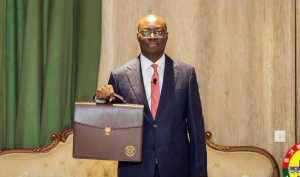
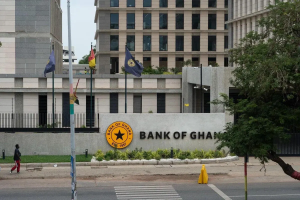
The Bank of Ghana (BoG) is working to ensure that businesses access cheaper funding, Governor of the central bank, Dr Johnson Pandit Asiama, has said.
He says that the present war in the Middle East is having an impact on the domestic economy. He expressed confidence that when the war is over, Ghana will return to the trend of cheaper borrowing rates for businesses.
He was answering questions during the 131st Monetary Policy Committee (MPC) press conference held in Accra on Wednesday, July 23.
“Lower interest rates are good for everyone; private sector people can borrow at lower rates.
“We are still committed to that; we want to see businesses access cheaper funding because then they can expand and create jobs, but it is a process.
“Running an economy, you are faced with global shocks, domestic shocks, exogenous shocks. When those shocks come your way, you need to adjust to them, and so we believe that by the time these shocks we are facing now edge out, we will see a return to that lower interest trend we are seeing from last year,” he said.
Dr Asiama further said that the easing of geopolitical tensions around mid-June proved short-lived.
He said the renewed escalation of the conflict has led to another closure of the Strait of Hormuz, and triggered instability in energy markets.
Notwithstanding these developments, he said, global economic activity has remained resilient, supported by substantial investments related to artificial intelligence, particularly in the United States and China, as well as the drawdown of crude oil inventories to ease supply pressures arising from the conflict.
“Consequently, the IMF projected global growth at 3 percent in July 2026, broadly unchanged from the April 2026 forecast of 3.1 percent. A further escalation of the conflict could, however, weaken the near-term growth outlook.
“Crude oil prices have rebounded above US$85 per barrel following the renewed conflict. Together with supply chain disruptions, this is expected to further slow the pace of disinflation across several countries.
” In response, most central banks have paused their monetary policy rate cuts. Global financing conditions remain broadly accommodative in both Advanced and Emerging Market Economies. However, with heightened uncertainty and emerging inflationary pressures, financing conditions could tighten in the near-term, with adverse implications for Emerging Developing Economies, including Ghana. Domestically, economic activity remained resilient in the first quarter of 2026. Real GDP growth was 6.4 percent, driven by the services and industry sectors, compared with 6.2 percent growth recorded in the same quarter of 2025,” he said.
He added “the Bank’s Composite Index of Economic Activity (CIEA), which tracks high frequency real sector indicators, pointed to a sustained increase in economic activity.
“The CIEA recorded annual growth of 13.4 percent in May 2026 compared with 4.4 percent in May 2025. Credit to the private sector, international trade activities, industrial production, and tourist arrivals, all contributed to the improved economic performance during the period. The latest confidence surveys, conducted in June 2026 showed positive consumer and business sentiments, supported by optimism about growth prospects, subdued inflation, and declining lending rates.”
Source: 3news.com by laud-nartey