Mid-Year budget: IERPP tells Finance Minister to provide transparent data and clarify unresolved aspects of the fiscal story
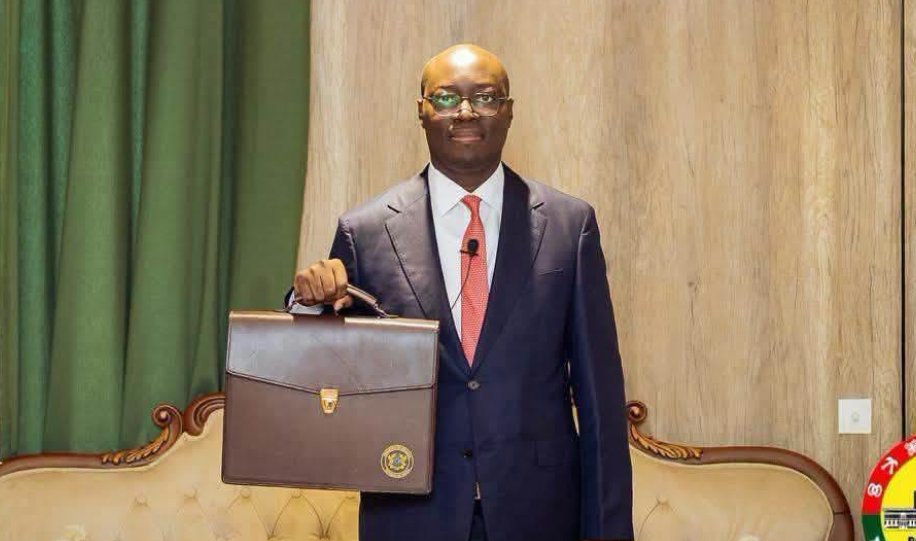
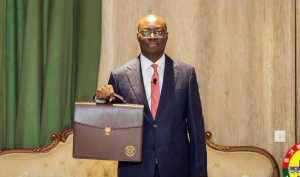
The Institute for Economic Research and Public Policy (IERPP) says it has closely monitored the mid-year budget presentation delivered by the finance minister to Parliament on Thursday, July 23, 2026.
While the Institute acknowledges improvements in key macroeconomic indicators, including falling inflation, a relatively stable cedi, and a stronger debt-to-GDP ratio , it also notes that the review fell short of revealing the full picture behind these gains.
The policy think tank said that a credible accounting requires more than a catalogue of achievements; it demands an honest reckoning with the gaps and unexplained figures that remain.
For this reason, IERPP called on Government to complete the narrative it began in the mid-year budget review by providing transparent data and clarifying the unresolved aspects of its fiscal story.
IERPP said that among the most conspicuous gaps in the Mid-Year budget review is the silence surrounding the government’s own flagship programmes, which appear to have gone from loud promises to silent whispers.
Mid-Year budget: IERPP tells Finance Minister to provide transparent data and clarify unresolved aspects of the fiscal story
The Institute for Economic Research and Public Policy (IERPP) says it has closely monitored the mid-year budget presentation delivered by the finance minister to Parliament on Thursday, July 23, 2026.
While the Institute acknowledges improvements in key macroeconomic indicators, including falling inflation, a relatively stable cedi, and a stronger debt-to-GDP ratio , it also notes that the review fell short of revealing the full picture behind these gains.
The policy think tank said that a credible accounting requires more than a catalogue of achievements; it demands an honest reckoning with the gaps and unexplained figures that remain.
For this reason, IERPP called on Government to complete the narrative it began in the mid-year budget review by providing transparent data and clarifying the unresolved aspects of its fiscal story.
IERPP said that among the most conspicuous gaps in the Mid-Year budget review is the silence surrounding the government’s own flagship programmes, which appear to have gone from loud promises to silent whispers.
“The mid-year budget review failed to provide updates on either the 24-hour economy or Nkonko-Nkitinkiti. The 24-hour economy, championed by the NDC in opposition as a game-changing solution to Ghana’s unemployment crisis under the slogan “1 3 3,” was allocated GH¢110 million in the 2026 budget presented to Parliament in November 2025.
“Yet the review offered no information on the number of jobs created, the workers currently on payroll, or the companies driving employment under this initiative. Similarly, Government earmarked GH¢245 million for Nkonko-Nkitinkiti, a programme designed to revamp the local poultry industry, generate jobs, and reduce dependence on imported birds; however, the mid-year review was silent on its progress, leaving unanswered questions about its implementation and impact. By distancing itself from these flagship policies, the government has left Ghanaians in the dark. Citizens deserve transparency and accountability,not silence ,on the true state of these initiatives,” a statement they issued said.
The statement further said that a similar pattern of selective disclosure marks the presentation of the debt figures, where a full barn conceals an uncounted debt.
“The review reports that Ghana’s public debt fell from 61.8% of GDP at the end of 2024 to 45.0% by June 2026. Yet this is a ratio, not an absolute figure; ratios can decline even while debt itself rises, if the economy expands faster or if currency movements inflate the denominator,” he said.
IERPP said that indeed, the Bank of Ghana’s own data show total public debt climbing from GH¢663.4 billion in January 2026 to GH¢720.8 billion by May 2026, an increase of about GH¢57 billion in just five months.
“This level is virtually unchanged from the GH¢726 billion recorded in December 2024, underscoring that the debt burden has not meaningfully improved. What emerges, therefore, is a gloomier reality masked beneath a seemingly attractive debt-to-GDP ratio. The public deserves transparency: both the ratio and the absolute debt figures should be presented together, not selectively, so that Ghanaians can see the full picture.
“This selectivity extends to a loan that was not on the table. A household that borrows quietly before announcing it has ‘balanced the books’ has not lied, exactly ,it has simply chosen which parts of the ledger to read aloud. Parliament recently approved a facility of roughly US$1 billion, a fact raised in the House itself by the Minority’s First Deputy Whip, who urged Government to spend down existing facilities before seeking new ones. The Mid-Year Review, a document meant to give Parliament and the public a full account of the country’s debt position, makes no direct mention of this facility, its purpose, or how it fits into the debt trajectory being celebrated. An account of the debt that leaves out a recently approved billion-dollar facility is not yet a full account.”
It also said that questions of definition also surround Free Secondary Education, prompting them to the Finance Minister: who’s free?
“Free SHS has long been defended, publicly and proudly, as a programme funded entirely from domestic resources, with no foreign loans attached to the promise. The review credits GH¢1.8 billion to Free SHS this year, consistent with that pledge. At the same time, Government has secured a US$300 million World Bank/IDA credit facility financing new schools, rehabilitated schools, and category upgrades ,the very infrastructure listed in the review’s education section. Government’s position is that the loan pays only for buildings and systems, never for recurrent Free SHS costs, and that this technically preserves the ‘no-loan’ promise. Perhaps so. But a school that is loan-built and fee-free is still, taken as a whole, partly loan-financed. A promise kept by redrawing which line item it applies to is a promise kept on paper. Ghanaians who were told ‘no loans’ deserve to know plainly whether that now means ‘no loans for the parts we choose to count.’”
Equally troubling is the matter of the vault that was frozen., they said.
Government reports that it reallocated GH¢350 million from the Contingency Vote for flood relief because the Contingency Fund itself had been frozen by an Accra High Court garnishee order.
“A national emergency fund, frozen by a court over an unexplained judgment, is not a footnote ,it is the headline. What liability was large enough to freeze money set aside for national emergencies?
“The review does not say. A citizen asked to trust that the state’s emergency reserves are sound cannot be told only that they were unavailable when needed most, without also being told why,” they said.
Source: 3news.com by laud-nartey