Central Banks can no longer safeguard stability by looking only at individual institutions – Asiama
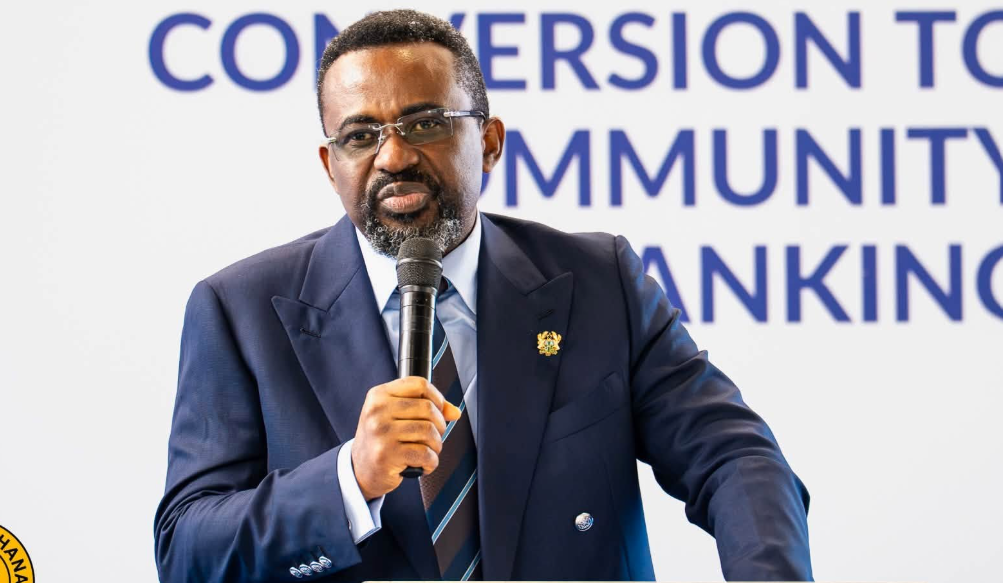
Governor of the Bank of Ghana (BoG), Dr Johnson Pandit Asiama, has said that the financial system the BoG regulates currently is no longer defined only by banks, balance sheets and banking halls.
He says it is increasingly shaped by digital platforms, payment networks, technology providers and new forms of financial intermediation.
This changing architecture creates enormous opportunities, but it also changes where risks arise and how quickly they can spread, he said.
For central banks, the implication is clear, he said.
” We can no longer safeguard stability by looking only at individual institutions. In a digital financial system, stability depends not only on the strength of institutions, but also on the strength of the connections between them,” he said during the Financial Architecture Summit 2026, National Banking College (NBC) held last Wednesday, July 16.
A Changing Financial Landscape
Dr Asaiama said that around the world, rapid advances in technology, changing consumer expectations, new business models and increasing economic interconnectedness are redefining how financial services are designed, delivered, supervised and consumed.
The boundaries that once separated banks from technology companies, payment service providers, telecommunications firms and other financial intermediaries are becoming increasingly blurred, he said.
“Digital platforms now facilitate transactions in real time. Artificial intelligence is transforming credit assessment and fraud detection. Distributed ledger technologies are redefining approaches to payments and settlement.
” Consumers increasingly expect financial services to be seamless, secure, personalised and available at the touch of a button. What matters for regulators is not the novelty of these technologies alone, but the new dependencies they create across the financial system,” he said.
He noted that the challenge is therefore clear: “how do we embrace innovation while preserving the confidence, stability and trust upon which every successful financial system depends? The answer is not to choose between them. It is to build the infrastructure, the regulation and the supervisory capacity that allow both to advance together.”
Digital Finance and the New Architecture of Financial Intermediation
Dr Pandit Asiama said that changing landscape is building a new architecture of financial intermediation.
For emerging and developing economies such as Ghana, that architecture presents a unique opportunity, he said.
He added that technology has the potential to bridge longstanding gaps in financial access, reduce transaction costs, improve operational efficiency and support the growth of small and medium-sized enterprises, the backbone of our economy.
“Ghana has made significant progress in this regard. Over the past decade, our country has emerged as one of Africa’s leading digital finance ecosystems. In April this year alone, Ghanaians moved 493.2 billion cedis through mobile money, across 967 million transactions.
“Twenty-six million accounts were active, served by 534,000 active agents. GhIPSS Instant Pay settled a further 79.0 billion cedis. Point of sale terminals rose from just over sixteen thousand a year earlier to more than twenty-three thousand. The rapid growth of mobile money, the interoperability of payment systems and the increasing adoption of digital financial services have transformed the way Ghanaians transact and interact with the financial system.
“However, innovation also brings new challenges. As financial services become increasingly digital, the nature of risk is also evolving. Cybersecurity threats have become more sophisticated. Digital fraud is growing in complexity. Operational resilience is now as critical as financial resilience. The increasing reliance on third-party technology providers, cloud infrastructure and artificial intelligence raises important questions about governance, accountability, data protection and systemic risk,” he said.
He also stated that the rise of virtual assets, tokenised financial instruments and decentralised finance is further reshaping the financial landscape.
While these innovations hold considerable promise, they also pose significant regulatory, prudential and consumer protection challenges, he said.
The Evolving Role of the Bank of Ghana
Dr Asiama said that a changing financial architecture requires a changing central bank.
“The Bank of Ghana recognises that the erosion of the traditional boundaries of financial regulation calls for a corresponding shift in the way central banks approach regulation and supervision. This means broadening our field of vision: from individual institutions to the networks that connect them; from traditional financial risks to operational, technological and cyber risks; and from responding only after innovation reaches the market to engaging with it earlier in its development.
“That is not an aspiration. It is already underway. Our objective is not to regulate innovation out of existence. Neither is it to permit innovation to outpace the safeguards necessary to preserve confidence in the financial system. Rather, our approach is guided by a simple but important principle: innovation should flourish within a regulatory framework that promotes trust, protects consumers, preserves market integrity and safeguards financial stability.
“The revised Cyber and Information Security Directive, which we launched in March, is the clearest expression of that shift. This Bank no longer supervises only capital adequacy ratios and liquidity positions. Under that Directive, we are safeguarding the confidentiality, integrity and availability of the data that powers our economy. It places cyber risk expertise on your boards. It sets the first comprehensive framework in our financial ecosystem for the governance of artificial intelligence in fraud detection, credit scoring and customer service. It establishes clear rules for the adoption of cloud technology. And its proportionality framework exists because we listened to the industry before we issued it, not afterwards.”
Traditionally, he said, supervision has focused on the soundness of individual institutions. he said that remains essential but in an increasingly interconnected financial system, the stability of each institution also depends on the networks, technology providers, payment infrastructures and service relationships that connect it to others.
“Our regulatory philosophy is therefore evolving from one that focuses primarily on institutional supervision to one that increasingly considers ecosystem resilience. What that means in practice is this. A bank may be financially sound and still be vulnerable to the failure of a shared technology provider, a payment network or a critical telecommunications service. Supervision must therefore consider not only the condition of individual institutions, but also the dependencies that connect them. This philosophy has shaped our work in three priority areas.
“The priority is modernising the financial infrastructure. Innovation cannot be sustained unless it rests on rails that are secure, interoperable and inclusive.
“We are investing continuously in modernising Ghana’s national payment infrastructure, building a financial ecosystem that is secure, efficient, interoperable and inclusive. A modern payment system is a critical national infrastructure that underpins commerce, investment and economic growth.”
Source: 3news.com by laud-nartey