$11.5b in prospective investments pledged for Mahama’s 24-Hour Economy programme
Ghana’s flagship 24-Hour Economy Programme has drawn over US$11.5 billion in prospective investments and is targeting 1.7 million quality jobs before the end of President John Dramani Mahama’s current term, government has announced.
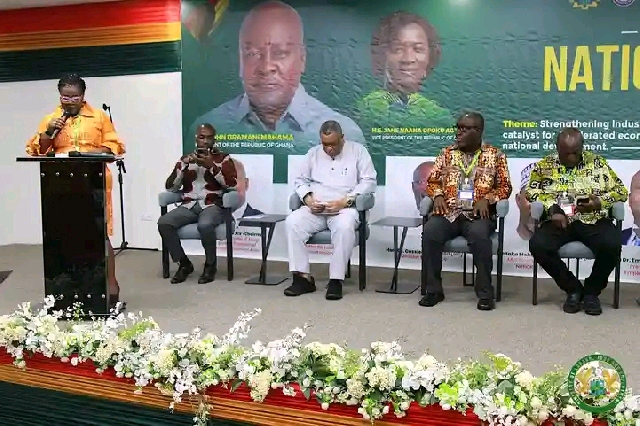
Presidential Advisor on the 24-Hour Economy and Accelerated Export Development Programme, Mr Augustus Tanoh, disclosed this at a National Labour Conference in Ho with organised labour and employers.
Mr Tanoh said the programme is not about “marginal tweaks” but a complete overhaul of Ghana’s productive sectors.
He identified key bottlenecks holding back competitiveness: logistics costs that make up 60% of retail prices, land acquisition challenges, poor shared infrastructure, and a skills mismatch in the workforce.
“These do not yield marginal tweaks. They have to be entirely and completely re-engineered,” he stressed.
Since its launch in July 2025, government has locked in US$5.5 billion under binding joint development agreements out of the US$11.5 billion total pledged.
Government has also mobilised 605,000 hectares of land through a participatory model that protects community ownership while opening land for investment.
The programme’s 1.7 million job target includes both direct and indirect employment. A “quality job”, Mr. Tanoh said, must pay at least the national minimum wage, provide skills training, meet tax compliance standards, and last a minimum of 12 months.
He called on organised labour to lead the charge as the economy expands.
“Government provides the catalytic instruments. Employers assume the investment risk. Organised labour has the responsibility of ensuring that modernization translates into decent work rather than greater exploitation of workers,” he said.
With an estimated 1.5 million potential new union members, he warned unions to organize workers in new industrial zones or risk labour contractors dominating the space.
Government is also working with the German Agricultural Workers Union to boost rural jobs through cooperatives and is overhauling Ghana’s cooperative laws.
Mr Tanoh added that the programme will also strengthen African trade by building regional supply chains “that place workers at the centre of development.”