Ghana’s external reserves hit $14.5bn as inflation falls to 3.3%, economy stabilising – BoG Governor
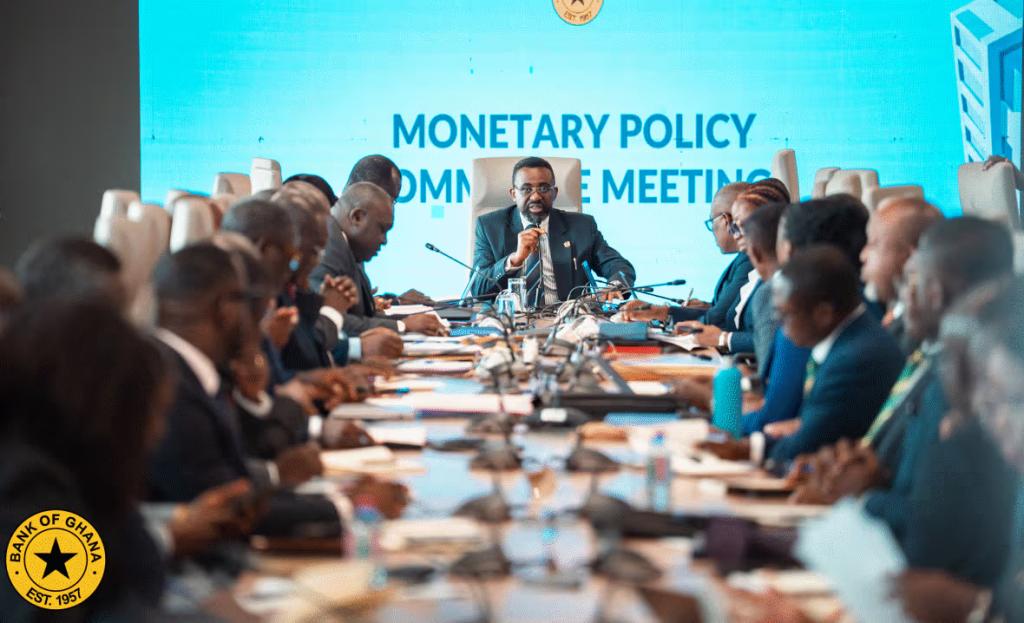
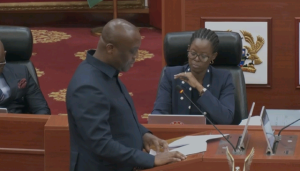
Ghana’s economy is stabilising faster than expected, with inflation easing sharply and external reserves strengthening, Governor of the Bank of Ghana, Johnson Pandit Asiama, has said at the opening of the 129th Monetary Policy Committee (MPC) meeting.
Addressing members of the committee on Monday, March 16, Dr Asiama noted that recent data point to a broad-based improvement in macroeconomic conditions, driven by disciplined policy measures and growing confidence in the economy.
Headline inflation, he said, declined to 3.3 percent in February 2026, marking the 14th consecutive monthly drop and falling below the central bank’s medium-term target band.
“Taken together, these indicators point to an economy stabilising more quickly than many had expected,” he stated, adding that fiscal and real sector performance have also improved.
According to the Governor, Ghana recorded a primary surplus of 2.6 percent of GDP at the end of 2025, while business and consumer confidence have strengthened, supporting a gradual recovery in credit growth.
On the external front, the Governor disclosed that international reserves have risen to approximately $14.5 billion, equivalent to about 5.8 months of import cover, up from just over $13 billion recorded at the previous MPC meeting in January.
He stressed that the improved reserves position is critical for maintaining investor confidence and enhancing the country’s ability to absorb global shocks.
Dr Asiama also highlighted the government’s newly announced Ghana Accelerated National Reserve Accumulation Programme (GANRAP), which aims to significantly boost the country’s external buffers.
“The programme targets raising international reserves to the equivalent of 50 months of import cover by 2028, compared with the current level of around 5.8 months,” he said.
However, he cautioned that such an ambitious initiative would require careful coordination of monetary policy, liquidity management, and the central bank’s balance sheet.
Despite the positive outlook, the MPC is approaching its deliberations with caution amid rising global uncertainties. Dr Asiama warned that escalating tensions in the Middle East could disrupt energy markets and shipping routes, posing risks of imported inflation for Ghana.
“The question before the committee is not whether conditions have improved, but how we respond to that improvement when the factors that enabled it are now under pressure,” he emphasised.
The outcome of the 129th MPC meeting is expected to provide critical signals on Ghana’s monetary policy direction as authorities balance economic recovery with emerging external risks.
Source: 3news By Evans Effah